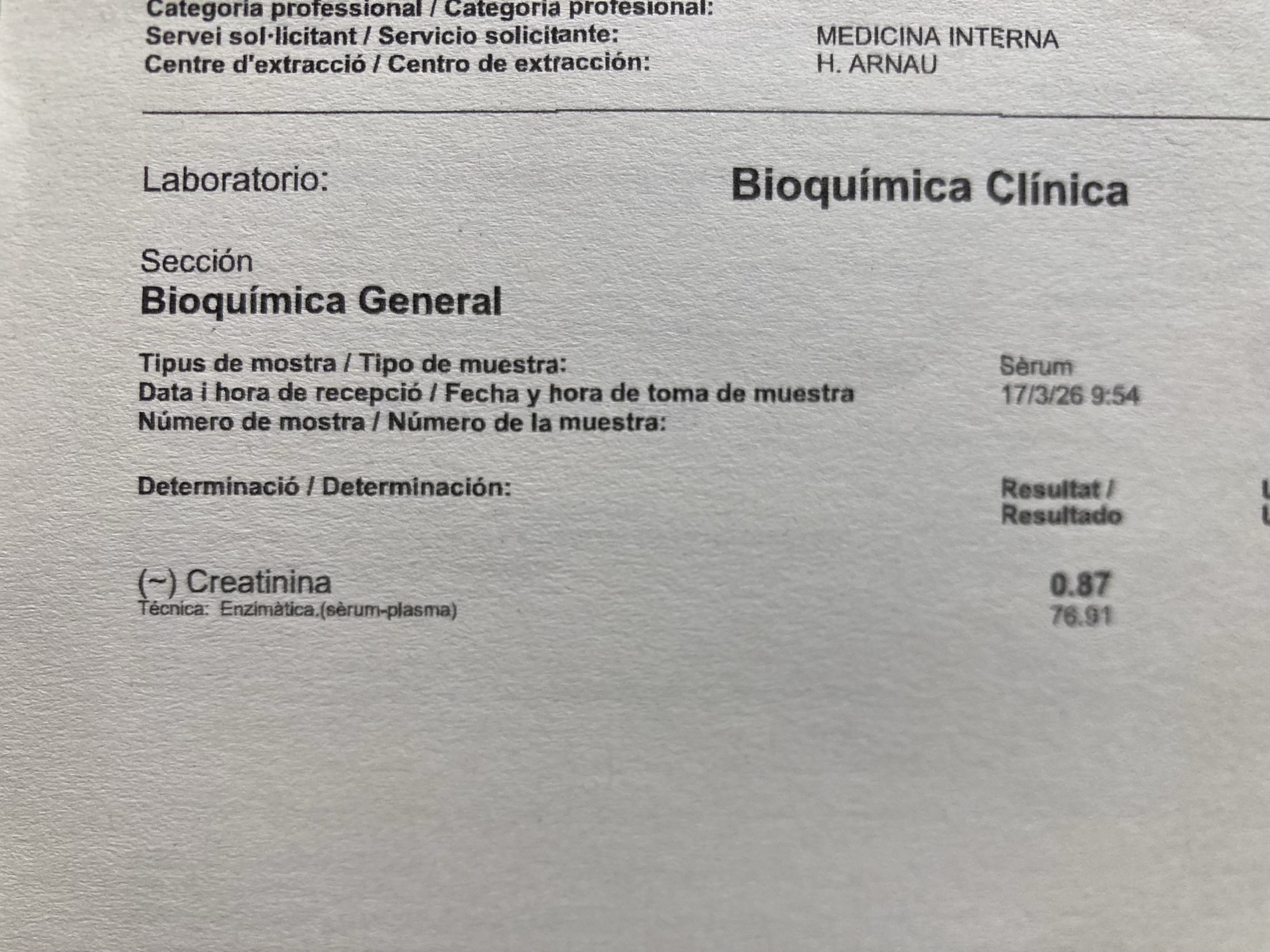
Monday, 23 February 2026
I leave home for the CAP, the primary healthcare centre, to ask for a doctor who can follow my case. I wait in the queue in the sun.
It seems that, in order to do this, I have to request the transfer of my medical records from the Basque Country to Catalonia. The medical problem now becomes an administrative one.
After insisting on the priority—my sick body—and refusing to deal merely with administrative matters, they send me to the second floor. I will be seen there. I arrive and there is hardly anyone around.
When I am attended to, the problem becomes administrative again. I insist, with my sick body, that I need blood tests on Thursday and the results on Friday, as Dr Aurora told me.
The nurse returns with a doctor and a resident. The doctor will not be able to see me and the resident suggests that I go back to the Hospital so that I can be treated as an emergency. That is what I do.
I return to the Hospital. I greet the security guard. I wait. I am seen. It feels like Saturday, but today is Monday and there are many more people. Everything the same or worse.
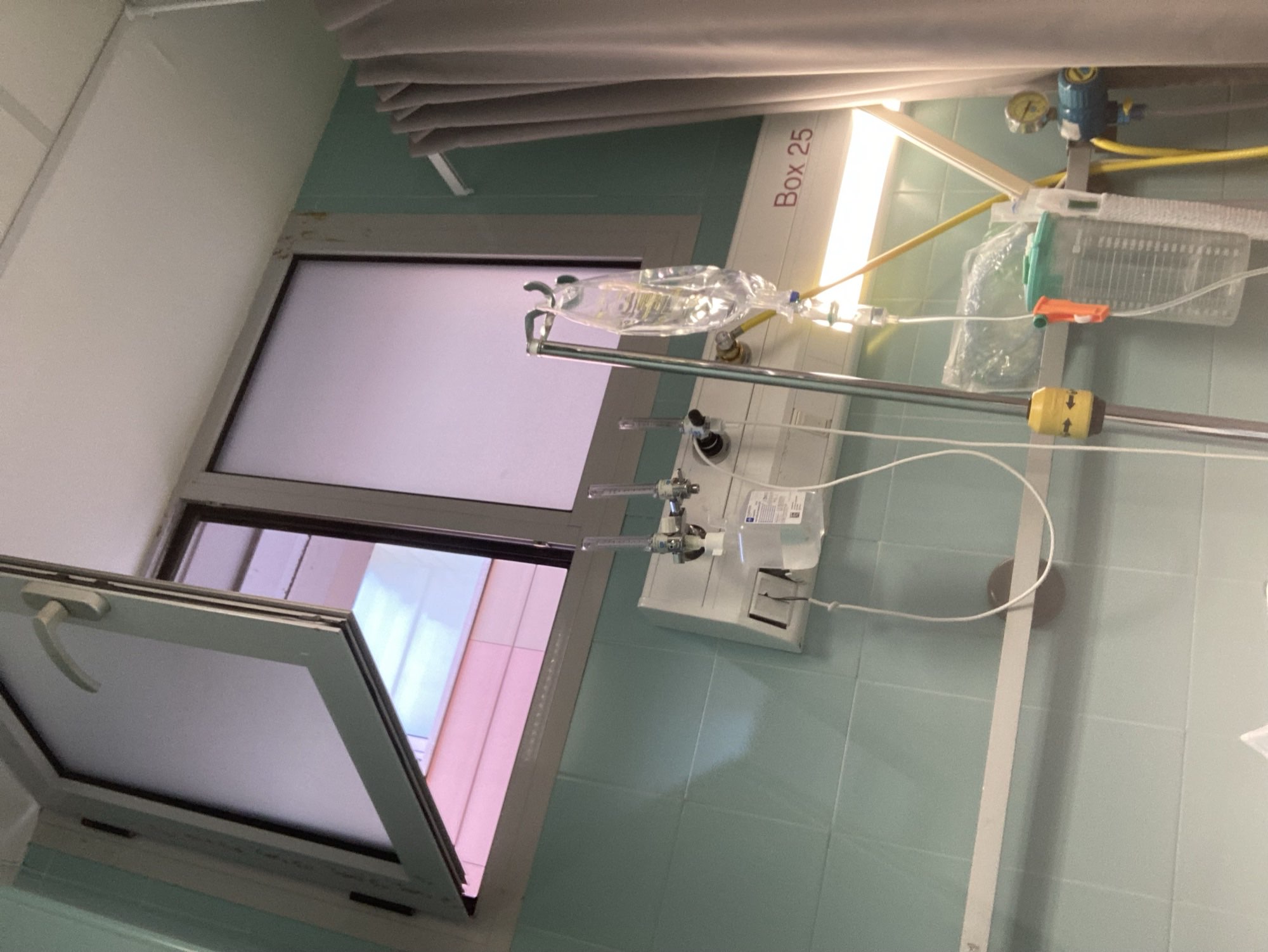
A window is opened because the elderly man on the other side of a thin curtain has shit himself. Fresh air comes in and the birds can be heard. This is what I was looking for.
Nothing else. I take photographs and make a recording of the moment while the vital-sign monitor of the retired patient next door, behind the curtain, keeps sounding. Everything sounds much better now:
Beep, beep, tweet, tweet (repeat)
The doctor comes in at this moment and insists that he cannot be certain of his diagnosis after carrying out the relevant tests. It may be, or it may not. He looks at me and asks: Shall I admit you?
I admit myself. He admits me. I am admitted. The journey begins. I wait. They come to collect me. I greet another orderly, again, somewhere around here. I go up one floor. I wait.
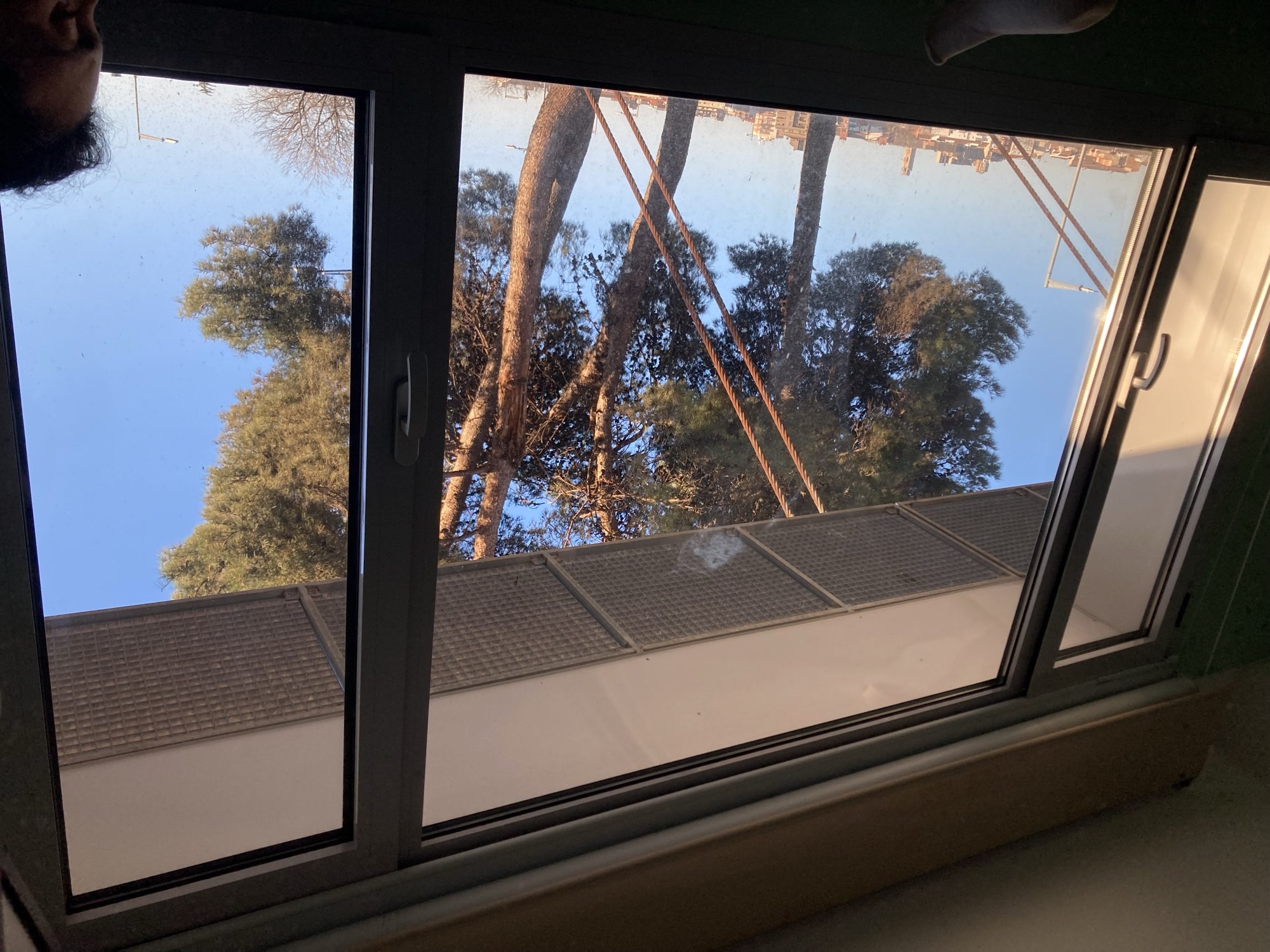
I meet my new neighbour behind the curtain. Another retired elderly man, but this one is in a very bad way. He coughs constantly. He breathes heavily. His phlegm sounds and he seems to be dying all the time. He does not manage it. He remains alive, although he is not trying to.
His daughter arrives and tells him: it is because you started smoking again. The father speaks, but only his daughter understands him. His voice sounds like brown mucus. He almost chokes. He does not manage it. He asks his daughter to bring him Don Simón, cold, very cold, and maize rinds. He seems to want to die; he tries. I wait. There are pigeons in the tree opposite as the sun sets over Lleida. It is cold.
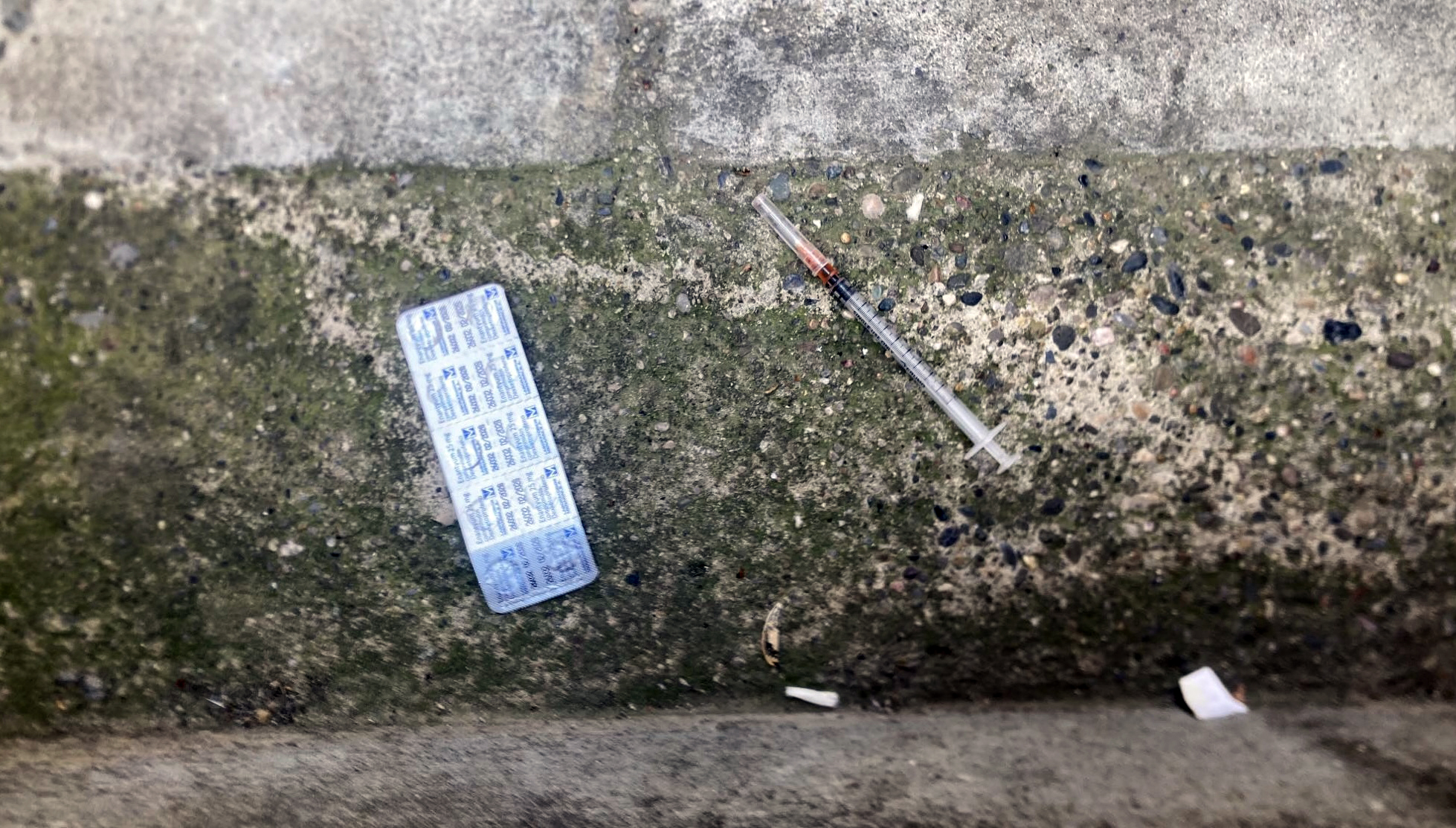
They come to collect me. A young man takes me. He tells me there is a lot of heroin throughout Catalonia. He says it is because of rents and immigration. He has now moved to Lleida. He says he was better off here than in Badalona. Thank goodness. Night falls.
We arrive, but first he warns us: your roommate is a little, a little, a little problematic. I ask and he replies: he is violent. He has spent several days in isolation. He takes drugs. He cannot control himself.
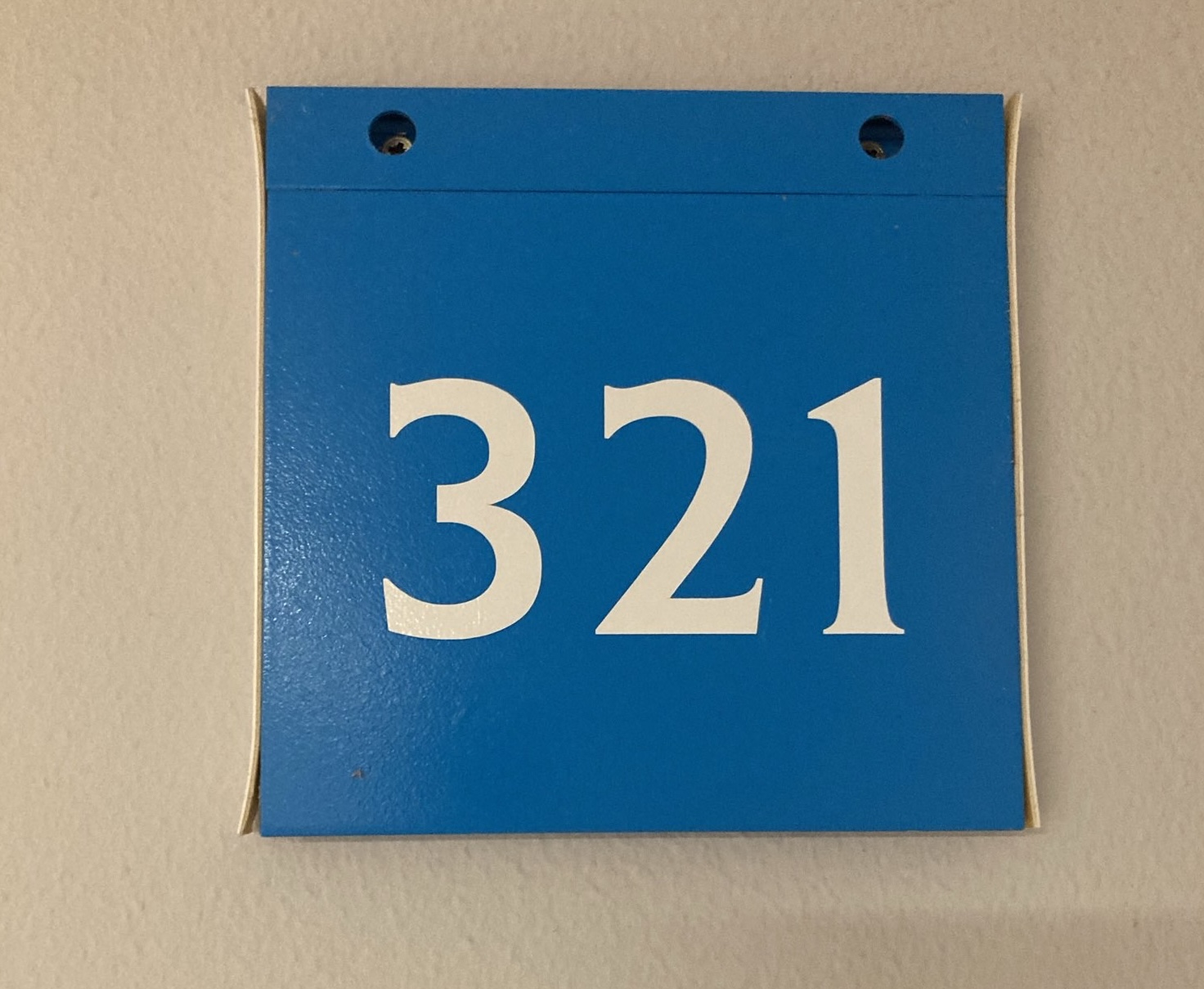
I enter. I say hello. It does not look like a hospital. It looks like a prison. It smells of a sentence. My companion looks at me and says: this is going to be a very long night. Change of plans.
I ask my companion not to bring me anything, only my phone charger. I do not feel safe. Go home and come back quickly, please, I beg. My battery runs out.
I remain alone with my new roommate, waiting for hours and hours.
He talks to me. I understand nothing. He does not care what he says. He understands whatever he wants. He does not listen. He is on his own trip. The Hospital is the best place to be, he tells me. I want to go home now.
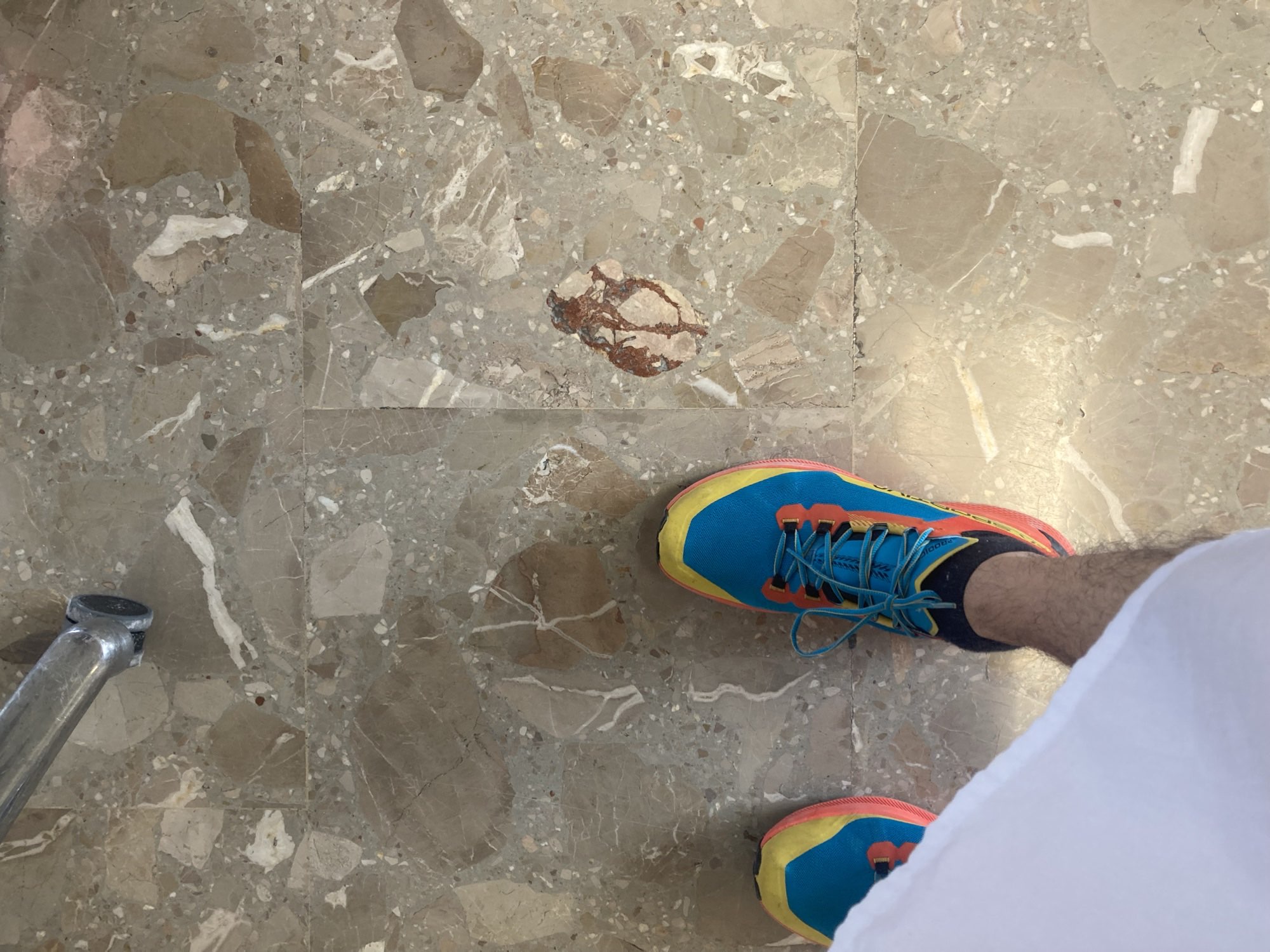
I go out. I walk. I think. I am leaving. I will ask to discharge myself. They do not have my medical records. Test results take days. In a few hours I could be back in my city. The food is good there.
I walk. I think. I meditate. People arrive. Always young men. They look like prison visitors. They gather in the waiting room at the end of the corridor. I remain alone in the room, waiting, without a battery.
I want to leave. To go home. My companion does not arrive. I keep waiting. I speak to the young man from before. He says there will be no problems. After a while an older colleague comes. He tells me to stay calm. I become nervous. Another man arrives whom I have not seen until now. He is the head nurse. He has an eternal smile that lasts no less than three seconds. No more and no less. Afterwards he has to make an effort to keep smiling. While we speak in the corridor, he points at my roommate and asks whether he is my problem. I tell him no. I do not want trouble. I explain the situation and my medical records. It makes no difference. He tells me that he will do everything possible to move me to another room if I need it. Now is precisely when I need it, but he never appears.
This is what happened: my companion arrives, already a little late. I explain the situation. The doctor arrives, then another, and soon there are four doctors at once. We form a circle. Only one doctor and I speak. She tells me this is serious. I have got worse. That is what the tests say. She does not recommend that I discharge myself. I tell her I am not going to yield a single centimetre in a way that goes against my health. Remaining any longer in that Hospital room seems to be more than a centimetre. They have no medical history and there are days ahead before the test results will be known. They understand. They seem not to care. Once again they ask if the problem is my roommate. I tell them the problem is my health. It makes no difference. They leave.
I decide to stay, with no alternative. I ask to speak to Rafa, the head nurse with the eternal smile, so that he will keep his word. They are looking for a room for us. It is difficult. Staying is more difficult, I think. My cellmate has dinner. They give him a Valium. He takes it. He falls asleep intermittently. He tries to escape for a cigarette. He asks about my colourful trainers. He takes something from the drawer that visitors had brought him hours earlier. I pray that it is drugs and not a razor blade, as he had asked a nurse for earlier.
For shaving, he said. He wants to smoke. He cannot. We lie down. Not asleep. He starts smoking at the window, in the bathroom, all the time, everywhere. Nobody can remain in the room. It is two in the morning.
I had left home to ask for help and avoid getting worse.
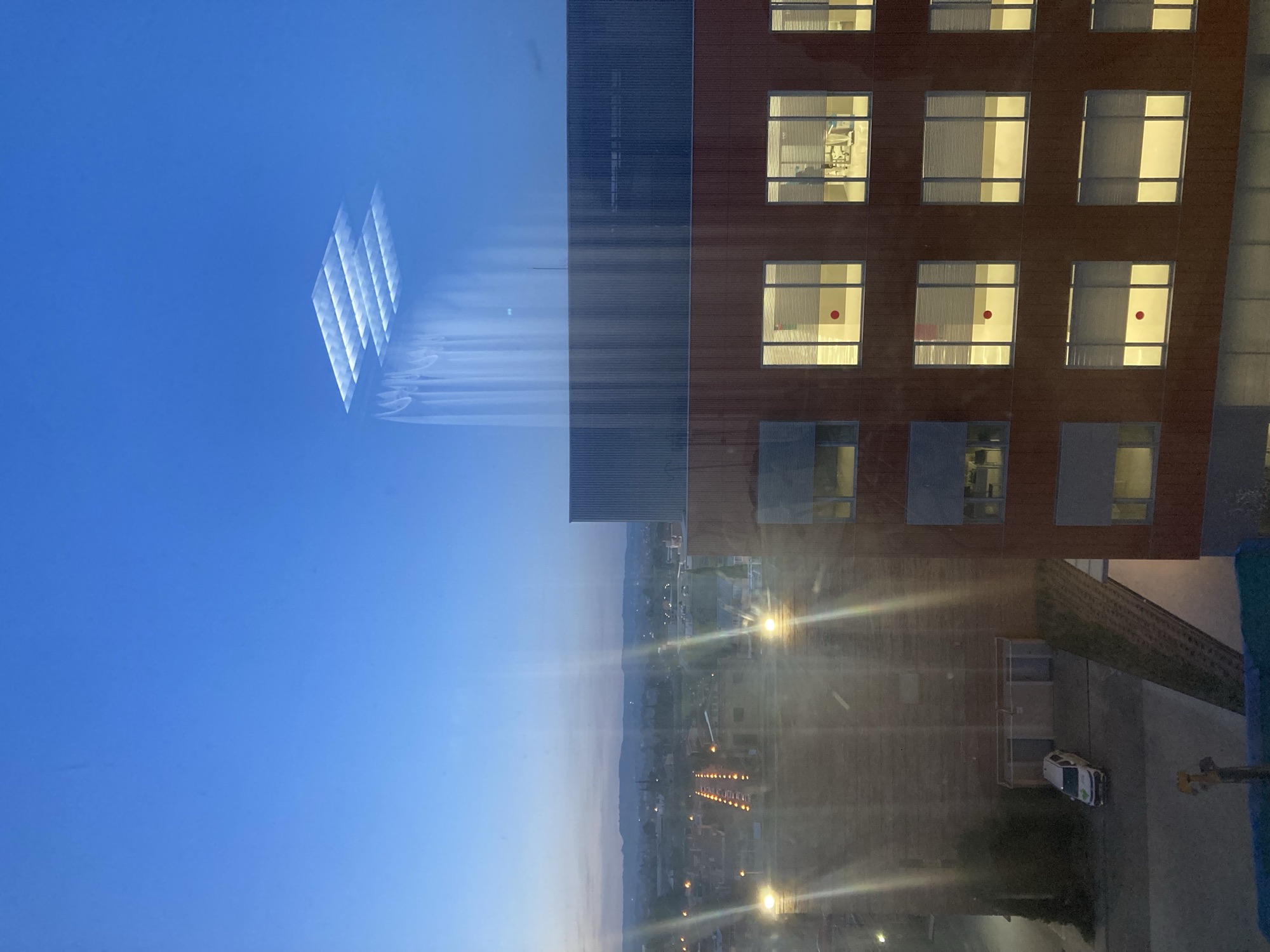
I become nervous. I speak to the nurses. I ask for help. I receive none. I say I am going to call the police. I cannot hold an ill addict from Pamplona, a product of the eighties, responsible; I must hold the entire medical team responsible. Obviously. They are responsible. Always. It does not seem so. I suffer it.
They call security. Two young men arrive. One of them looks like a pit bull. He glares at me. I look back and tell him that I am not the problem. I repeat it. It makes no difference. He keeps looking at me as though I were his problem. His colleague tells him the same thing: that I am not the problem. Then he stops looking at me as though he were about to slap me. I speak to them. I explain the situation. They thank me.
We ask about the room that never arrives, the place where I might undergo being ill. They make us wait in the waiting room at the far end. It is cold. I would rather not do this. I have no choice. I do not want consequences. I do not want revenge. I wait. They shout. They shout louder. Blows can be heard. It is almost three in the morning. I become even more nervous. I breathe. There is no way. I look out into the corridor. Everyone looks at us. They tell us that now, at last, we may leave. Thank goodness. I gather my few belongings. I cross the corridor. Everyone looks at me. Nobody says anything. Nothing. I look at the pit bull. He says goodbye with an eyebrow. Nothing more.
I arrive on another floor. Another planet. Kind people who speak calmly. I have no words. I sit silently on the bed, as though inside a Hopper painting. I wait no longer.
Tuesday, 24 February 2026
Pain here is not a source of knowledge. Pain here is a diagnosis of the symptom, and the symptom must be eradicated, and first the pain. Are you in pain? They ask all the time. No. Then without pain there is no medication. If you are in pain, they medicate you. And so time passes. Nothing happens. Only time. Your body knows.
The nurses and doctors come and go. They check the body like airport security. Little else. Once again they ask whether I am in pain. I answer no. I remain without medication.
At least on this new floor they are very kind. Always smiling. Truly. They work very hard all the time. They never stop. They do everything, constantly. They clean. They hand out food. They take vital signs. They distribute medication. They check the drips. They answer every call. They come and go. Always with a smile and never enough time. We are many sick bodies.
Today I learn that Éliane Radigue died yesterday.
At the end of the other corridor on the same floor there is another corridor. Different. It looks like the approach to an airport boarding gate. White and glass-walled. Long. Almost infinite.
I enter. I hear a constant sound. Subtle and permanent. It is hot. It is cold. One does not quite know whether it is one or the other. My ears travel along this infinite corridor. Again and again. Always different.
It must be Éliane Radigue.
Wednesday, 25 February 2026
Tonight my neighbour behind the curtain has not stopped snoring. I have woken a thousand times, for a thousand hours. It felt like an eternal night with a duel at dawn. His chest was like a subwoofer. It made everything reverberate. My day began at night. I am still here.
The doctors came by in the morning. They gave me good news. They will probably discharge me soon, in one or two days. Best of all, my body has reacted and managed to generate antibodies against this damned virus without any medication.
In principle, if I continue like this no treatment will be needed. Better that way. The numbers seem good. I am proud of my body. It is stronger than I thought. Better that way.
The origin of the virus is not clear. It could be many more things than those I read about online. Many more. You ask Chat and it tells you what you want to hear. Reality appears to be something else.
Whatever the case, wherever it came from, I see the light. Little by little.
Thursday, 26 February 2026
My curtain neighbour, the one who snores like a subwoofer, leaves. I am alone. Alone in the room. The nurses come and go. They clean and clear up. They prepare the bed for the next person. Next patient. How little we are, how briefly we last.
Some leave and others arrive. I wonder who will come now. I wonder whether he will snore. Whether his family will occupy the empty space now before me. It is all in my mind.
For the moment I am alone. Sunlight enters slowly. Softly. It touches everything. Everything shines faintly. Solitude too. It smells clean. There is nobody here. Only me.
An orderly arrives—a zelador, with a z. He moves the chairs, the bed. He moves everything. He tells me he will soon bring my new roommate. He prepares everything for his arrival. I wait. I am curious.
My new roommate arrives. Accompanied by two relatives. They are all very friendly. They talk more than the others. These ones are more entertaining, despite the speech. We greet one another.
I walk. I leave them alone. Calmly. I keep walking. I return to the room. Little by little. I settle in. I sit. I lie down. In silence. I read.
Night falls. He snores lightly. Another night with almost no sleep. I feel better, little by little. Mornings belong to those who make use of them. To those who wish to scrape one minute from existence.
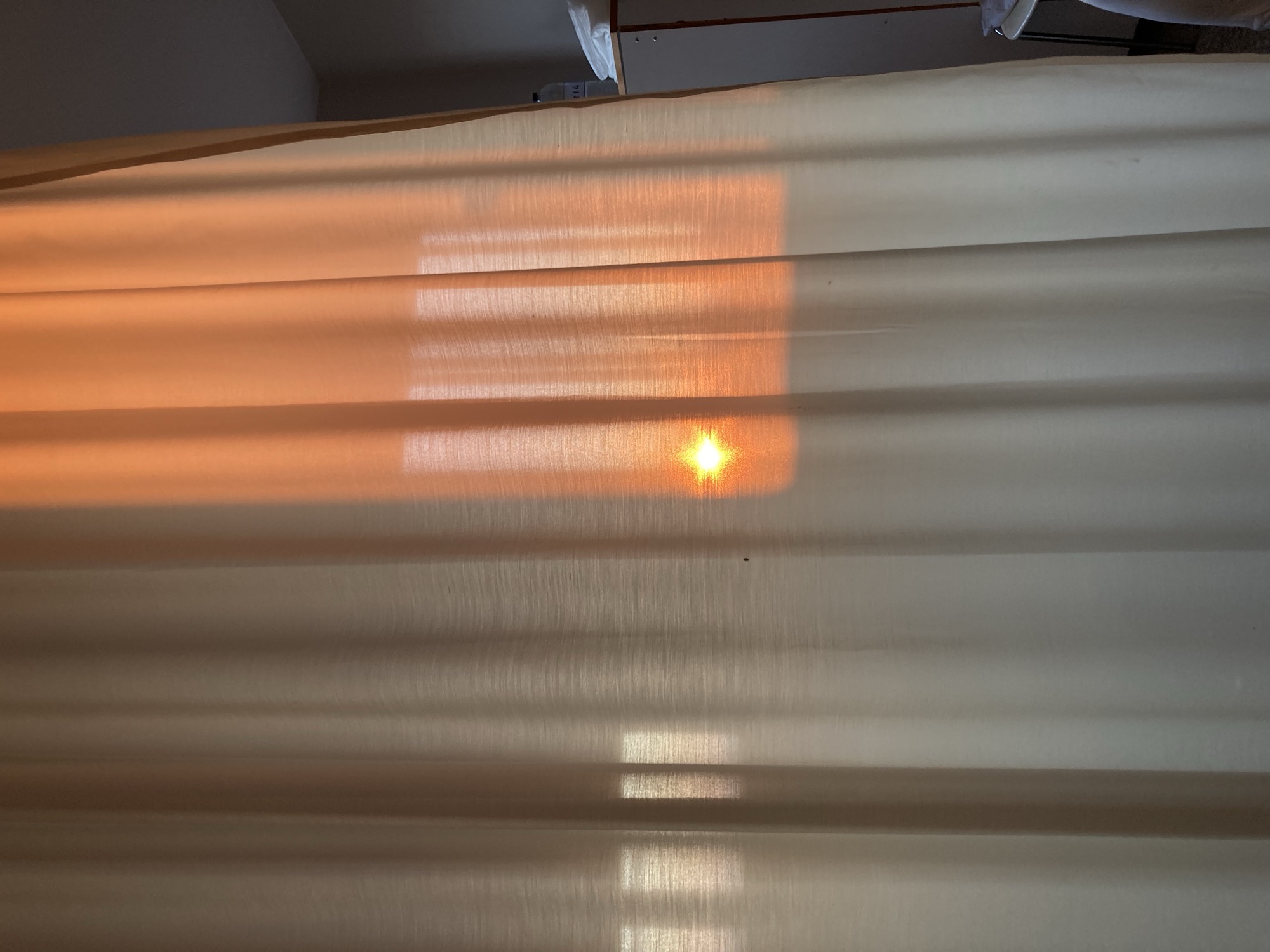
The sun rises again. It fills the room with orange. The windows make rectangular shapes. The curtains make undulating shapes. Everything is light and silence. Calm and awakening.
There is almost no time left before I leave. This is what I think. This is what I want. This is what I desire. I cannot help it. I cannot stop thinking that today is the day I will leave this prison called Hospital.
Nobody wants to be here. Everyone would rather not have to come in. Everyone wants to leave. The patients. The nurses. The doctors. The cleaners. The orderlies, the zeladores with their zeds. Everyone.
I cannot help it. I get up. I walk. I move through the corridors thinking that tomorrow I will no longer be here. Everything is different. Nothing is certain. Desire shapes reality, and reality imposes its possible possibilities, probable and improbable. I have doubts. I have desire.
I wait and wait for the doctors. They keep us waiting. They are what I most desire. They do not arrive. I am anxious to know whether today will be the day all this has ended, so that I can move on to something else. Butterflies.
At last the moment arrives. They arrive. They sit down. They look at me. They tell me I look better. They speak to me. They ask whether I want to leave. Before I speak they have already read the answer. On my face.
They discharge me. I leave. I say goodbye. Everything is different now. I step out onto the street. I do not recognise what I see. Everyone now is very large. Larger. There is so much air. So many people.
I do not recognise myself. I no longer know how to get home. It is strange. I go inside. It is stranger still. I am happy. I am born again. I have another new chance to begin again. Although everything remains where I left it. Both inside and outside.
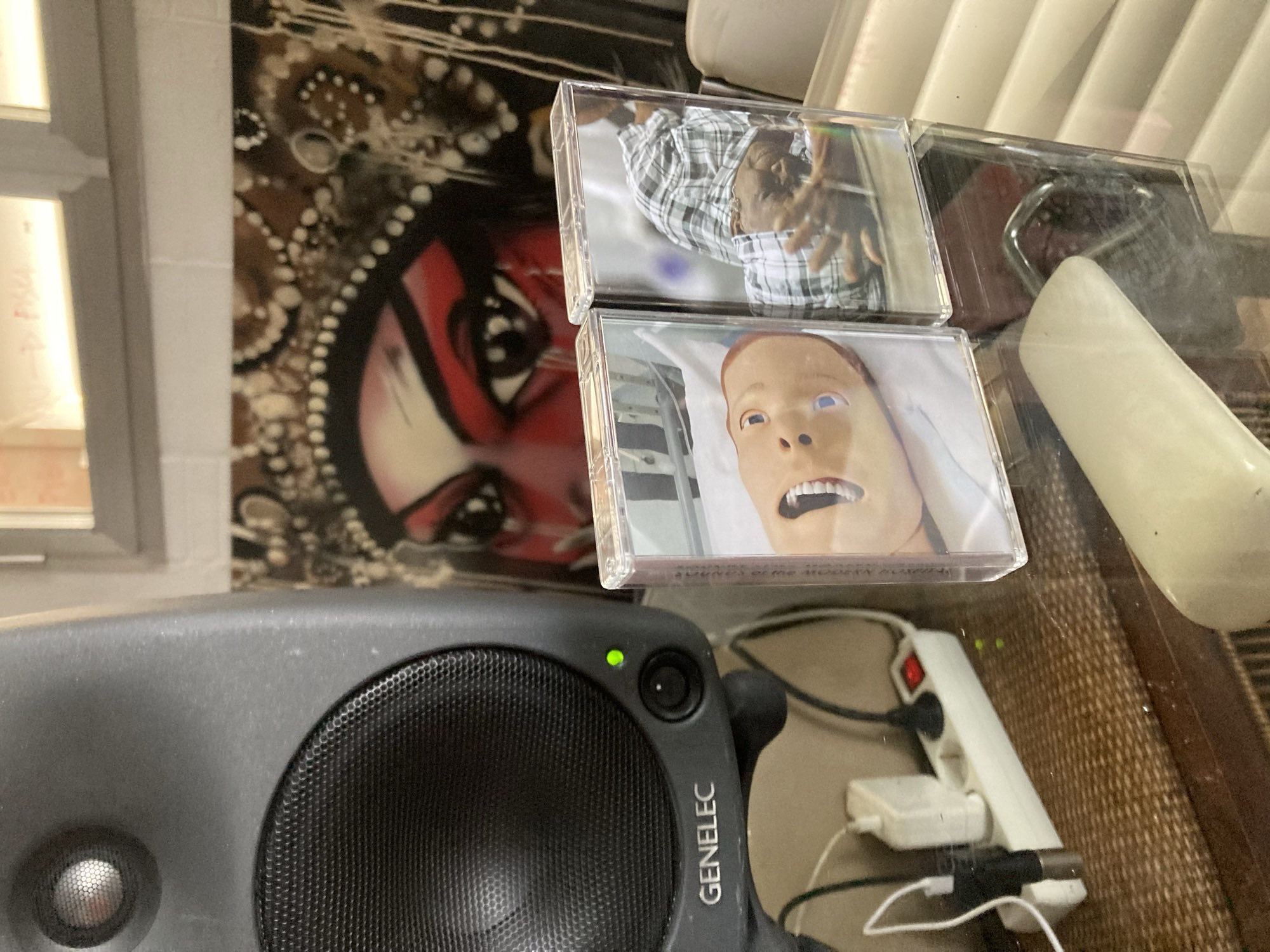
This experience has changed me without my noticing. It is subtle and permanent. Like Éliane Radigue’s corridor. The sun falls across the bed.
Now I want to be alone. Alone with my pain.
A pain that never appeared throughout this whole experience. I have had no pains. I have had only one pain, in the singular: the pain of existence. Of the possibility of dying. As though it were nothing. In silence. This is my pain.
How can I integrate death into my life without pain? Change is always in the future conjugated in the present. If there is no change, there is no day without sun.
Friday, 27 February 2026
I sleep. I wake very early. It is 4:44. I get up. I write. I put things in order. I have breakfast. I watch dawn arrive little by little. Slowly. Gently. Life returns to its place.
I am lucky to be alive. I give thanks. Now. Now I want to make use of every minute. I want to do things. I want to be alone.
I do not want to watch time pass as though it were nothing. Listening seems to leave no trace, but life does. I want to be alone, to listen to myself and leave a trace within myself. I ask, but I am not heard.
I listen as the world subtly wakes. I breathe.
Sick bodies are the ones that know how to hear the pains of this world. Those who do not writhe do not know what it means to hurt. Pain without pain is that which has no name. The unnameable. A stammer. A turning of being itself. A poem.
Today a new day begins, as though nothing had happened. Despite everything, thank you.